

Buying a home is an exciting milestone, but if you’re not sure where to begin, you’re certainly not alone.
How much money do you really need? Should you get a mortgage pre-approval before looking at homes? How do you know whether a property is worth its asking price? And what happens after your offer is accepted?
Whether you’re buying your first home, relocating to Edmonton, or preparing for your next move, understanding the process can make the experience much less overwhelming.
At ARIVL, we believe an informed buyer is a confident buyer. Our role isn’t simply to help you find a property. It’s to help you understand your options, recognize potential risks, evaluate opportunities, and make decisions that suit your circumstances.
In this guide, we’ll walk you through 10 essential steps to buying a home in Edmonton and throughout Alberta, from preparing your finances to getting your keys and settling into homeownership.
Along the way, we’ll share practical advice, explain some of the important details of Alberta real estate transactions, and connect you with additional resources when you want to explore a topic further.
Your Home-Buying Journey at a Glance
Here’s what the typical home-buying process looks like:
- Decide whether you’re ready to buy.
- Understand your budget and obtain mortgage pre-approval.
- Choose your REALTOR® and build your buying team.
- Explore neighbourhoods and identify the right type of home.
- View properties and evaluate your options.
- Prepare, negotiate, and finalize your purchase offer.
- Complete your conditions and due diligence.
- Finalize financing and prepare for closing.
- Take possession of your new home.
- Settle in and plan for the responsibilities of homeownership.
Every purchase is different. Some steps overlap, and your circumstances may require additional planning, particularly if you’re buying and selling simultaneously, purchasing a condominium, or buying a newly constructed home.
The important thing is understanding what comes next and having the right support along the way.
1. Are You Ready to Buy a Home?
Before you start browsing listings, take a moment to think about why you want to buy.
Maybe you’re tired of renting. Perhaps you need more room, want a shorter commute, or are looking for a different lifestyle. You might even be moving to Edmonton for work or considering buying a property that could accommodate your needs for years to come.
There’s no single right reason to become a homeowner, but having a clear sense of your priorities will help you make better decisions throughout the process.
Start by asking yourself a few questions
- How long do I expect to live in this home?
- What would owning a home allow me to do that my current living situation doesn’t?
- Am I financially prepared for the ongoing costs of ownership?
- What changes might happen in my personal or professional life over the next few years?
- Am I comfortable taking responsibility for maintenance and unexpected repairs?
These questions matter because buying a home isn’t just about qualifying for a mortgage.
It’s about choosing a property and a financial commitment that make sense for your life.
Should you wait for a better market?
It’s tempting to try to predict where home prices and mortgage rates will go next.
The challenge is that no one can consistently identify the perfect time to buy.
Instead of making your decision entirely around market predictions, consider your financial readiness, housing needs, and how long you expect to own the property.
Market conditions still matter. They can influence pricing, competition, negotiation strategies, and your options as a buyer.
But the right purchase is ultimately one that works for you.
ARIVL’s advice: Start with your goals rather than your search results. Knowing what you’re trying to accomplish will help you distinguish between a home that looks appealing and one that genuinely fits your needs.
2. Understand Your Budget Before Shopping
One of the most important steps in buying a home is understanding how much you can comfortably afford.
And there’s an important distinction here: the amount a lender is willing to approve isn’t necessarily the amount you should spend.
Your mortgage payment is only one component of homeownership.
Before you start looking at properties, it’s worth understanding how your down payment, monthly expenses, and closing costs fit together. For a more detailed breakdown, including practical Edmonton purchase examples, explore our guide: How Much Money Do You Really Need to Buy a Home in Edmonton?.
What does owning a home actually cost?
Depending on the property, your monthly and annual expenses could include:
- Mortgage payments
- Property taxes
- Home insurance
- Electricity, natural gas, water, and waste services
- Condominium fees, where applicable
- Regular maintenance and future repairs
- Landscaping, snow removal, and other property expenses
A detached house and an apartment condominium might have similar purchase prices but very different ongoing expenses.
For example, a condominium may have monthly fees covering certain common-property expenses, while a detached homeowner typically pays directly for maintenance and repairs.
Neither option is automatically more affordable. You need to look at the full picture.
How much down payment do you need in Alberta?
For eligible mortgage purchases, Canada’s general minimum down payment requirements are:
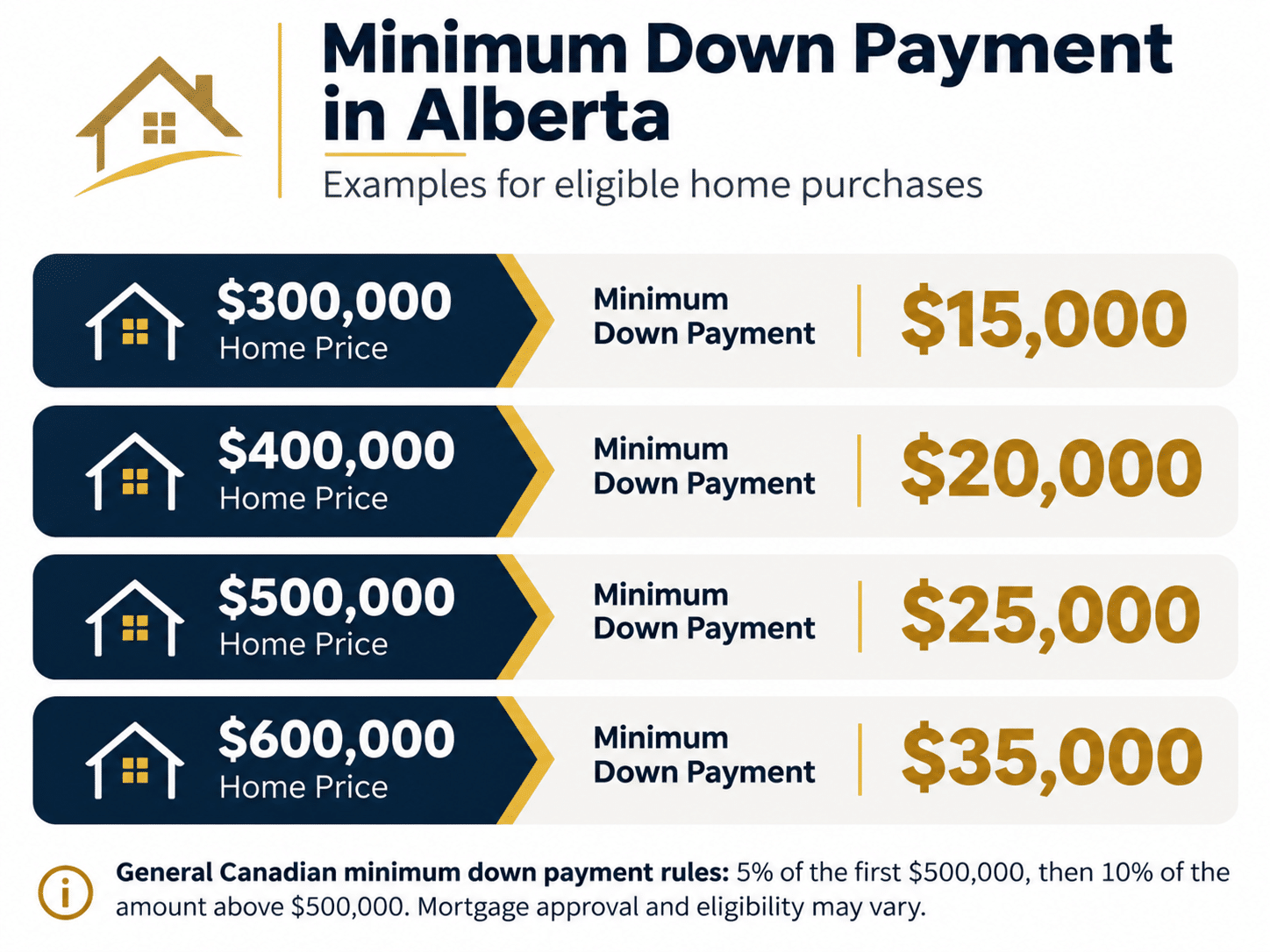
For a property priced below $1.5 million, the minimum down payment is generally 5% of the first $500,000 and 10% of the remaining portion.
For properties priced at $1.5 million or more, a minimum down payment of 20% generally applies.
These are minimums, not guarantees of mortgage eligibility. Your lender may require more depending on the property, financing arrangement, and your financial circumstances.
When your down payment is less than 20%, mortgage default insurance is generally required for eligible loans. This adds to your borrowing costs.
You can review the federal government’s down payment guidelines for more information.
Don’t forget your closing costs
Your down payment isn’t the only money you’ll need.
You should also budget for legal fees, land title registration charges, inspections, insurance, moving expenses, and potential adjustments at closing.
If you’re buying a newly constructed home, GST and the eligibility for applicable rebates also deserve attention.
For a detailed breakdown, including an example of closing costs on a $400,000 Edmonton home, read our guide to closing costs when buying a home in Alberta. It explains the expenses you should prepare for and when you may need to pay them.
Your mortgage professional and lawyer can help you estimate the actual amounts relevant to your purchase.
Why mortgage pre-approval matters
Before viewing properties, speak with a mortgage professional about your financing options.
A pre-approval can help you understand:
- Your potential borrowing capacity
- Estimated mortgage payments
- Available mortgage terms and interest-rate options
- Down payment requirements
- Any financial issues worth resolving before making an offer
A pre-approval also makes it easier to narrow your property search to a realistic price range.
However, mortgage pre-approval is not the same as final financing approval. Your lender must still assess the property and confirm that you satisfy its lending requirements.
Are there programs for first-time buyers?
Depending on your eligibility, programs such as Canada’s First Home Savings Account (FHSA) and Home Buyers’ Plan (HBP) may help with your purchase.
These programs have different rules, benefits, and limitations, so it’s worth understanding them before deciding how to use your savings.
Our First-Time Home Buyer Programs and Incentives in Alberta guide explains these options alongside federal tax credits, the first-time buyer GST rebate for qualifying new homes, and mortgage programs worth exploring.
You can also review the official First Home Savings Account and Home Buyers’ Plan information for current eligibility requirements.
ARIVL’s advice: Build your budget around what you can comfortably afford, not just the maximum mortgage available to you. Homeownership should support your lifestyle, not leave you struggling to maintain it.
3. Choose the Right REALTOR® and Build Your Home-Buying Team
Buying a home is one of the biggest financial decisions you’ll make, so having the right people in your corner matters.
Your REALTOR® will likely be one of the professionals you communicate with most throughout the process. They’ll help you evaluate properties, understand market conditions, navigate negotiations, and make important decisions along the way.
But not every agent works the same way, and finding someone who understands your needs is just as important as finding someone who knows the market.
Take the Time to Interview a Few REALTORS®
Before committing to an agent, we encourage you to meet with two or three REALTORS®.
It’s an opportunity to understand their experience, communication style, approach to buying, and how they plan to represent your interests.
Consider asking:
- How familiar are you with the Edmonton neighbourhoods and property types I’m interested in?
- How will you help me determine whether a property is fairly priced?
- What does your process look like from our first meeting to possession day?
- How do you approach negotiations and multiple-offer situations?
- How will you help me identify potential risks during a purchase?
- What support can I expect throughout the process?
- How does buyer representation work, and how is your brokerage compensated?
Pay attention to how an agent answers your questions. Are they listening to your priorities? Are they explaining things clearly? Do they seem more interested in understanding your needs or getting you to make a decision?
A great working relationship starts with trust, communication, and the confidence that your interests are being taken seriously.
For more guidance, explore our article: How to Choose the Right Real Estate Agent in Edmonton.
What You Can Expect When Buying With ARIVL
At ARIVL, we believe buying a home should be a collaborative and informed experience.
We start by understanding you: your goals, priorities, lifestyle, financial considerations, and what you’re hoping to accomplish with your purchase.
From there, we help you build a practical buying strategy.
Our approach includes:
- A personalized buyer consultation: We’ll discuss your needs, explain the buying process, review expectations, and help establish a clear direction for your search.
- Thoughtful property recommendations: We’ll help you evaluate homes based on your priorities, not simply send listings that happen to fall within your price range.
- Market research and pricing guidance: When you find a property you love, we’ll review comparable sales, current competition, and relevant market conditions to help you make an informed offer.
- A careful approach to due diligence: We’ll help you understand important conditions, identify areas requiring additional investigation, and coordinate with qualified professionals when necessary.
- Clear communication throughout the purchase: We’ll explain the steps, deadlines, and decisions ahead so you know what to expect.
- Support beyond possession: Our relationship doesn’t have to end when you receive your keys. We’re here to remain a resource as your needs evolve.
Our goal isn’t simply to help you purchase a property. It’s to help you feel confident about the decisions you make along the way.
Understanding Buyer Representation in Alberta
Before working with a real estate professional, it’s important to understand how representation works and what responsibilities your brokerage has to you.
In Alberta, real estate professionals are regulated by the Real Estate Council of Alberta (RECA). You can verify a professional’s licensing status through RECA ProCheck.
When establishing a residential real estate client relationship, a written service agreement is generally required. For buyers, this is commonly known as a Buyer Representation Agreement.
The agreement explains important aspects of your relationship with the brokerage, including:
- The services and representation you’ll receive
- Whether the agreement is exclusive or non-exclusive
- The duration of the agreement
- Your responsibilities and the brokerage’s obligations
- How the brokerage will be compensated
- Terms relating to the agreement’s termination
At ARIVL, we believe you should understand what you’re agreeing to before signing anything. We’ll take the time to review the agreement, explain how representation works, and answer your questions.
For additional consumer information, we encourage you to read Working with a Licensee, published by RECA, Alberta’s real estate regulator.
The Other Professionals on Your Home-Buying Team
Your ARIVL agent will also help you understand when to involve other qualified professionals during your purchase.
Your mortgage professional helps you evaluate financing options, understand borrowing costs, and navigate the mortgage approval process.
Your real estate lawyer handles the legal aspects of the purchase, including documentation, title-related matters, mortgage instructions, and closing arrangements.
Your home inspector evaluates the accessible and visible condition of a property, helping you identify potential concerns and maintenance considerations.
Depending on the property, you may also need advice from condominium document reviewers, engineers, contractors, insurance professionals, or other specialists.
We’re happy to connect you with professionals we’ve worked with, while respecting your freedom to choose the service providers you feel most comfortable with.
ARIVL’s advice: Don’t feel pressured to work with the first agent you meet. Interview a few, ask thoughtful questions, and choose someone who makes you feel informed and supported. Buying a home is a partnership, and the right relationship can make all the difference.
4. Find the Right Home and Neighbourhood in Edmonton
Edmonton offers a wide variety of housing options, from apartments in the urban core to established neighbourhood homes and newer suburban developments.
The challenge isn’t necessarily finding a home you like. It’s finding one that works for your budget, lifestyle, and long-term plans.
Start with location
Think about how you spend your time.
Do you want to walk to restaurants and shops? Is access to transit important? Would you rather have a larger yard, a quieter street, or fewer maintenance responsibilities?
Edmonton neighbourhoods can offer dramatically different living experiences.
For example:
- Downtown and Oliver (Wîhkwêntôwin): Urban living with access to restaurants, services, entertainment, and a mix of condominium options.
- Strathcona and Ritchie: Established neighbourhoods with local businesses, character homes, and access to central Edmonton amenities.
- Riverbend and Terwillegar: Residential communities offering a variety of housing styles, parks, and access to southwest Edmonton.
- Windermere and Heritage Valley: Newer southwest Edmonton communities with a range of modern homes and expanding amenities.
- Highlands and other mature neighbourhoods: Established streetscapes, older housing stock, and opportunities for renovation or redevelopment, subject to applicable regulations.
These are examples rather than recommendations for every buyer. The best neighbourhood depends on your priorities and circumstances.
Understand Edmonton’s different housing types
You’ll encounter several common property styles during your search.
Detached houses generally provide more privacy and independent control over the property, but also come with greater maintenance responsibilities.
Duplexes and townhouses can offer a balance between space, affordability, and maintenance. Their ownership structures vary, so it’s important to understand exactly what you’re buying.
Apartment condominiums may offer a more convenient, lower-maintenance lifestyle and access to shared amenities, but condominium fees, bylaws, insurance, and the corporation’s financial health are important considerations.
Newly built homes may provide modern layouts and warranties, but you need to understand builder contracts, completion timelines, GST treatment, and which features are included.
Freehold versus condominium ownership
One distinction that buyers sometimes overlook is the difference between the style of home and the type of ownership.
A townhouse isn’t necessarily a condominium. A duplex isn’t necessarily freehold.
The ownership structure determines what you own individually, what may be shared, and which expenses and responsibilities belong to you.
This is especially important when comparing properties with similar appearances or asking prices.
Think beyond your immediate needs
If you’re planning to remain in the property for several years, consider how your needs might change.
Will the layout continue to work? Is there enough space? Would you be comfortable with the maintenance responsibilities? Are you buying a home that could be reasonably adaptable to future circumstances?
You don’t need to predict every life change, but it’s worth thinking beyond move-in day.
ARIVL’s advice: Don’t choose a property based on appearances alone. Consider the location, ownership structure, ongoing costs, condition, and whether the home supports the life you want to live.
5. View Homes With a Purpose
Once your budget and search criteria are established, it’s time to start exploring properties.
This can be one of the most enjoyable parts of buying a home, but it’s also where first impressions can become misleading.
A beautifully staged living room or renovated kitchen can make a property appealing. That doesn’t necessarily tell you much about its overall condition or long-term suitability.
What should you look for during a viewing?
Beyond the finishes and layout, pay attention to:
- Evidence of moisture or previous water damage
- Visible cracks or uneven flooring
- The apparent age and condition of windows and roofing
- Heating, cooling, plumbing, and electrical systems
- Natural light, room sizes, and storage
- Parking, access, and outdoor spaces
- Noise and surrounding development
- Signs of maintenance or repairs that may be needed
You won’t be able to evaluate every part of a property during a showing, and you shouldn’t be expected to.
The goal is to identify questions worth asking and concerns that may require further investigation.
Pay attention to Edmonton’s climate
Edmonton’s freeze-thaw cycles, cold winters, snow accumulation, and seasonal moisture can affect residential properties.
Depending on the home’s age and construction, it’s worth paying attention to grading and drainage, foundations, roofing, insulation, windows, and heating systems.
An older property isn’t necessarily a bad purchase, just as a newer home isn’t automatically free of problems.
What matters is understanding its condition and being prepared for the expenses and responsibilities involved.
Compare properties rather than rushing
Viewing several homes can help you recognize the differences in location, value, condition, and layout.
You may discover that certain features you initially considered essential aren’t as important as you thought.
Or you might realize that a particular compromise simply isn’t worth making.
ARIVL’s advice: Look past the presentation and evaluate the property as a place to live and maintain. The right home isn’t always the one with the nicest finishes. It’s the one that makes sense once you understand the whole picture.
6. Make an Informed and Competitive Offer
You’ve found a home that suits your needs.
Now comes an important decision: what should you offer, and what terms are appropriate?
In Alberta, the offer is typically prepared using a Residential Purchase Contract.
This document establishes the terms under which you’re proposing to purchase the property.
What goes into a purchase offer?
An offer commonly addresses:
- Purchase price
- Deposit amount and payment requirements
- Completion and possession arrangements
- Conditions and deadlines
- Included and excluded goods
- Other contractual terms relevant to the transaction
The offer becomes legally significant once properly accepted and communicated in accordance with its terms.
That’s why it’s important to understand what you’re signing before proceeding.
How do you decide what price to offer?
A useful starting point is reviewing comparable properties that have recently sold.
Your REALTOR® should help you consider:
- Recent comparable sales
- Active and competing listings
- The property’s condition and features
- Location and neighbourhood influences
- Current market conditions
- How the asking price compares with market evidence
An asking price is part of a seller’s marketing strategy. It isn’t necessarily a reliable measure of market value.
What makes an offer competitive?
Price is important, but it isn’t the only consideration.
A seller may value a particular possession date, a well-organized transaction, or terms that align with their circumstances.
In a multiple-offer situation, buyers may feel pressured to increase their price or reduce their conditions.
Before doing so, make sure you understand the financial and legal risks.
Removing important protections simply to make an offer more appealing can have serious consequences.
Understanding the deposit
A deposit is typically provided as part of the purchase process and credited toward the purchase price when the transaction closes.
The amount, deadline, and recipient depend on the agreed contractual terms.
In Alberta, deposits may be held by a real estate brokerage or another designated stakeholder, depending on the transaction.
What happens to a deposit if a purchase doesn’t proceed depends on the contract and the circumstances. It should never be assumed that a deposit is automatically refundable.
ARIVL’s advice: A strong offer is one that balances your objectives, the property’s market value, the seller’s circumstances, and the risks you’re comfortable accepting.
Related reading:
- How Writing an Offer Works (and What Conditions Really Mean)
- Breaking Down the Residential Purchase Contract
7. Complete Your Conditions and Due Diligence
Having your offer accepted is an exciting milestone, but it doesn’t necessarily mean your purchase is firm.
Many Alberta purchase agreements include conditions that provide buyers with an opportunity to complete specific investigations or obtain necessary approvals.
The conditions that apply to your purchase depend on what was negotiated and included in your signed contract.
Common buyer conditions in Alberta
Financing condition
Your lender reviews your application and the property to determine whether acceptable mortgage financing is available.
Even if you’ve obtained a pre-approval, additional documentation, an appraisal, or other lender requirements may still need to be completed.
Home inspection condition
A qualified inspector evaluates the property’s accessible and visible condition and provides information about potential concerns.
The inspection may identify maintenance needs, safety issues, or items requiring further evaluation.
Condominium document review condition
When purchasing a condominium, buyers should review relevant corporation documents.
These may include financial statements, budgets, reserve fund information, bylaws, meeting minutes, insurance documents, and information about potential special assessments.
A condominium purchase involves more than evaluating the individual unit. You’re also considering the financial and operational responsibilities associated with the corporation.
Sale of the buyer’s existing home
Some buyers negotiate a condition related to selling their current property.
These arrangements require careful attention to timing and contract terms, particularly when multiple transactions are involved.
What happens if something unexpected comes up?
Suppose your home inspection identifies a significant issue, or the condominium documents reveal financial concerns that weren’t apparent when you made your offer.
Depending on your contract, you may have options to negotiate, obtain further professional advice, or decline to proceed by complying with the applicable condition terms.
Your REALTOR® can help explain the process and coordinate with appropriate professionals when necessary.
Why condition deadlines matter
Conditions are governed by the wording of your purchase contract.
That includes deadlines, notices, and the steps required to satisfy or waive them.
Failing to address a condition properly can affect your rights and obligations.
Once a purchase becomes unconditional, the buyer is generally expected to complete the transaction. Failure to do so can result in serious financial and legal consequences.
ARIVL’s advice: Treat due diligence as one of the most important stages of your purchase. This is when you verify important assumptions before taking on the full commitment of ownership.
Related reading: Understanding the Condition Period: How to Navigate Financing, Inspections, and More
appropriate insurance coverage is in place and meets your lender’s requirements.
Make arrangements for applicable utilities and services, and plan your moving logistics.
If you’re purchasing a condominium, review what the corporation’s insurance covers and what coverage you need personally.
ARIVL’s advice: Don’t leave your closing preparations until the last few days. Staying organized and responding promptly to your lawyer and lender can help prevent avoidable delays.
Related reading:
- Closing Day Countdown: What Happens at the Lawyer’s Office After Conditions Are Waived
- How Property Taxes, Utilities, and Fees Are Adjusted at Closing
9. Take Possession of Your New Home
Possession day is the moment you’ve been working toward.
It’s when the process shifts from purchasing a property to actually becoming responsible for your new home.
In Alberta, the possession date and time are established in your purchase agreement.
The release of possession depends on the applicable closing requirements being completed and authorized. That means keys aren’t necessarily available first thing in the morning.
Your REALTOR® will help coordinate the arrangements and keep you informed.
What should you check after receiving possession?
Once you’re authorized to enter the property, take some time to review its condition.
Pay attention to:
- Whether the agreed included goods remain
- The condition and apparent operation of appliances and equipment
- Heating, cooling, plumbing, and electrical systems
- Any unexpected damage or missing items
- Keys, garage controls, mailbox keys, and access fobs
- The general condition of the property
If something doesn’t appear consistent with your purchase agreement, document the concern and contact your REALTOR® promptly.
Some issues may need to be referred to your lawyer.
Keep in mind that the right to conduct a walkthrough before possession isn’t automatic. Any such access should be properly arranged or provided for in the agreement.
Keep your important records
Create a folder for your:
- Purchase agreement and amendments
- Inspection report
- Mortgage and legal documents
- Insurance information
- Warranties and appliance manuals
- Condominium documents, where applicable
These records can be valuable for maintenance, insurance, future renovations, and eventually selling the property.
ARIVL’s advice: Plan your moving arrangements with some flexibility. Possession involves coordination between lenders, lawyers, and the parties to the transaction, and unexpected delays can occasionally occur.
10. Settle In and Plan for Homeownership
Getting your keys is an important achievement, but your responsibilities as a homeowner are just beginning.
A little preparation during your first few weeks can make a meaningful difference.
Get familiar with your home
Find out where the main water shutoff valve, electrical panel, heating equipment, and other important systems are located.
Review any available maintenance information and equipment manuals.
If your property has a sump pump, backwater valve, or other protective systems, understand how they work and what maintenance they require.
Create a maintenance plan
Every property needs maintenance, whether it’s newly constructed or several decades old.
Some expenses are predictable, such as furnace servicing or seasonal maintenance.
Others may arise unexpectedly.
Building a financial reserve for repairs can help you manage those responsibilities without placing unnecessary pressure on your household budget.
Understand your condominium responsibilities
If you’ve purchased a condominium, become familiar with the bylaws, insurance requirements, common-property responsibilities, and procedures for communicating with management or the board.
Condominium living can simplify certain maintenance responsibilities, but it doesn’t eliminate the financial obligations that come with property ownership.
Keep your long-term goals in mind
Your first home may not be your forever home.
Over time, you might renovate, refinance, purchase an investment property, or move to a home that better suits your circumstances.
Making thoughtful decisions now can help create more options later.
At ARIVL, we believe your relationship with your real estate professional shouldn’t end when you receive the keys.
Whether you have questions about ownership, want to understand the market, or are considering your next move, we’re here to remain a resource.
Frequently Asked Questions About Buying a Home in Edmonton
How long does it take to buy a home in Edmonton?
The timeline depends on your financing, search criteria, property availability, and the terms of your purchase agreement.
Some buyers find a suitable property relatively quickly, while others spend several months exploring their options.
Once an offer is accepted, the contract establishes important deadlines for conditions, closing, and possession.
Can I buy a home in Edmonton with a 5% down payment?
Potentially, yes.
Eligible buyers may qualify to purchase a home priced at $500,000 or less with a minimum 5% down payment. For higher-priced eligible homes below $1.5 million, different minimum down payment calculations apply.
Your income, credit, debt obligations, property type, and lender requirements also affect eligibility.
Do I need a REALTOR® to buy a home in Alberta?
No. You can purchase a property without hiring a REALTOR®.
However, a knowledgeable buyer representative can help you navigate property searches, market evaluations, purchase contracts, negotiations, and the due diligence process.
Before hiring a brokerage, make sure you understand the representation agreement and compensation arrangements.
Is a mortgage pre-approval enough to make an offer?
A mortgage pre-approval is a useful starting point, but it doesn’t guarantee final mortgage financing.
Your lender will still need to review the property and confirm that you meet its requirements.
Whether to include a financing condition in your offer is an important decision that should reflect your circumstances and your understanding of the risks.
How much are closing costs when buying a home in Alberta?
Closing costs vary based on the purchase price, property type, financing, legal expenses, and any applicable adjustments.
Buyers should budget for legal fees, land title registration charges, insurance, inspections, and other relevant expenses in addition to their down payment.
Your lawyer and mortgage professional can provide estimates specific to your purchase.
Is a home inspection required when buying a house in Alberta?
A home inspection is not automatically required for every purchase, but it’s strongly recommended for many resale homes.
An inspection can help identify visible concerns, maintenance issues, and areas requiring additional evaluation.
If you want an inspection to form part of your contractual due diligence, the appropriate condition should be negotiated into your offer.
Is buying a condominium different from buying a house?
Yes, particularly when it comes to ownership and maintenance responsibilities.
Condominium buyers should evaluate the corporation’s finances, reserve fund, bylaws, insurance, common property, and potential special assessments.
These considerations are important whether you’re purchasing an apartment condominium, townhouse condominium, or another condominium property.
What happens if I change my mind after my offer is accepted?
That depends on your purchase contract and the circumstances.
A conditional purchase may provide specific rights to decline to proceed if the applicable condition requirements are met.
An unconditional purchase creates significant legal obligations, and failing to complete the transaction may result in financial consequences.
If you’re uncertain about your rights or obligations, speak with your REALTOR® and obtain legal advice before taking action.
Ready to Explore Your Next Home in Edmonton?
Buying a home is a significant decision, but you don’t need to navigate it alone.
Whether you’re researching your first purchase, relocating to Edmonton, or preparing for your next move, the right information and professional guidance can help you move forward with confidence.
At ARIVL, we take the time to understand what matters to you, explain your options, and help you make informed decisions at every stage of the process.
When you’re ready, we’d love to be part of your next chapter.
Discover the ARIVL Home Buying Experience
Have questions? Contact our team at hq@arivl.ca or visit arivl.ca.
ARIVL: Your Real Estate Adventure Awaits!